
Arbutin and tranexamic acid can appear in the same skincare formula. That does not mean any two products containing them have been tested together, or that a higher combined percentage produces better results. Compare the ingredient identity, complete formula, directions and evidence for the specific product you are considering.
Three different questions behind “can I use them together?”
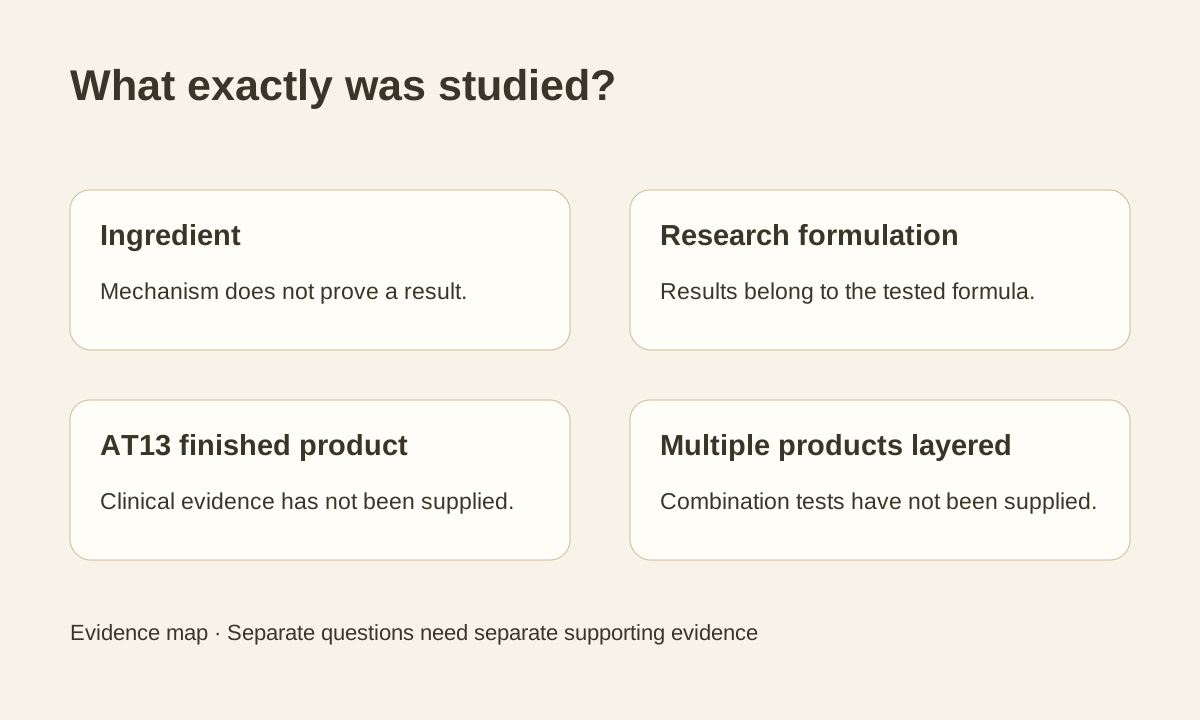
A manufacturer putting two ingredients in one cream is a formulation decision. A clinical study evaluates a particular formula under particular conditions. Applying two separate bottles introduces a different question: how the finished products behave together on your skin. Evidence for one of these situations does not automatically answer the others.
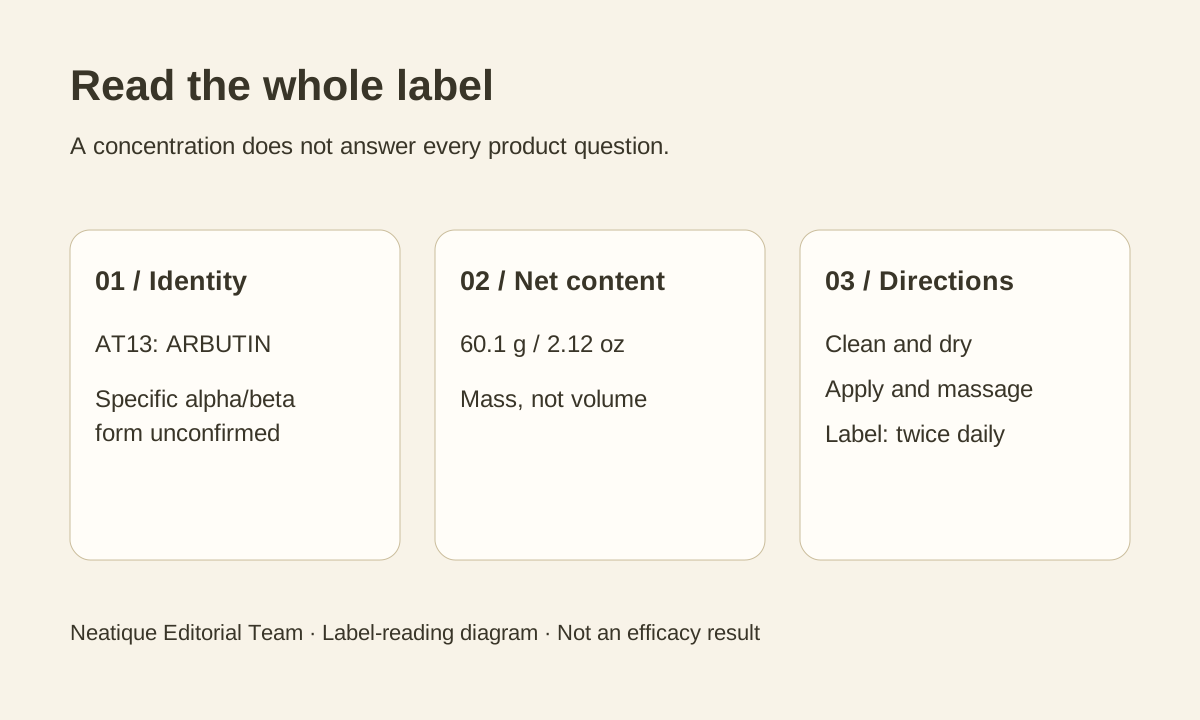
For a shopper, the useful starting point is the label. Does the formula contain ARBUTIN or ALPHA-ARBUTIN? Is tranexamic acid actually listed in the INCI? Is the format cream or serum? Does the brand provide evidence for the finished product, or only discuss its ingredients?
What original studies do and do not establish
| Original source | What was tested | Useful finding | Limit for this guide |
|---|---|---|---|
| Lee et al., 2014 (online 2013) | A moisturizer with 2% niacinamide and 2% tranexamic acid; randomized, vehicle-controlled, eight-week study in 42 women | Supports evaluating a defined combination formula | Does not test arbutin, AT13 or separate bottles layered together |
| Anwar et al., 2019 | Tranexamic acid combination serums with niacinamide, galactomyces ferment filtrate and alpha arbutin; 44 participants, four weeks, application to forearm areas | Provides formulation-specific combination evidence | Cannot isolate the contribution of each ingredient, establish facial results or predict AT13 performance |
| Maeda and Fukuda, 1996 | Arbutin in human melanocyte culture | Investigates tyrosinase-related activity in a laboratory system | Cell-culture activity is not a clinical result for a cream |
These studies ask different questions. Their populations, comparators, ingredient identities and formulations matter. This guide does not turn their findings into an expected percentage improvement or a results deadline for AT13.
A label example: Neatique AT13
AT13 Arbutin + Tranexamic Acid Cream is labelled 8% arbutin and 5% tranexamic acid. Its INCI reads ARBUTIN; a specific alpha/beta form is unconfirmed. Net content is 60.1 g / 2.12 oz by mass. The formula also lists niacinamide without a stated percentage.
AT13 finished-product clinical results have not been supplied for this guide. Neither have tests of AT13 layered with Neatique NT16, TNV3 or a retinol product. These are evidence gaps, not findings that a combination succeeds or fails.
Choose a simple reading and shopping path
- For ingredient identity, read Arbutin vs Alpha Arbutin.
- For comparisons, read Arbutin vs Tranexamic Acid.
- For the missing routine step, compare serum and cream formats and the existing serum collection.
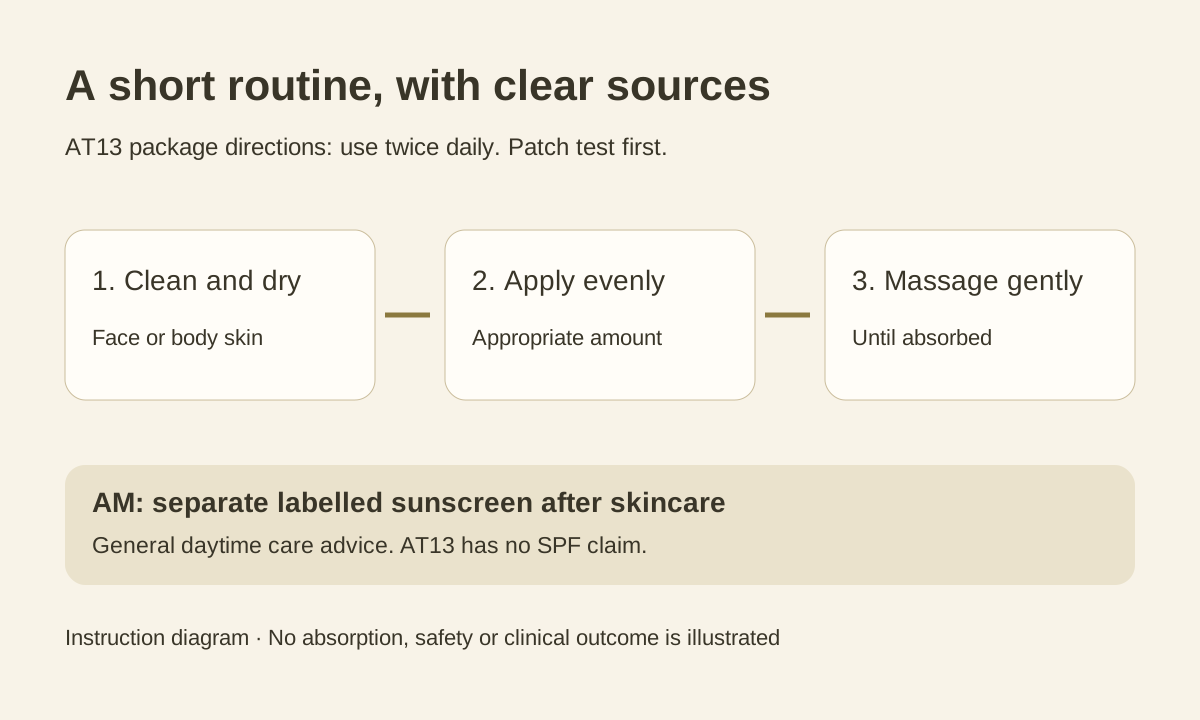
- For AT13 specifically, follow the package-based use guide.
Introducing several unfamiliar tone-focused products at once also makes a comfort problem harder to investigate. Keep a record of what changed, read every product's warnings, and stop a new product if irritation develops. A professional can assess a diagnosed skin condition or persistent symptoms; a cosmetic ingredient comparison does not supply that assessment.
Frequently asked questions
Does a study of a combination prove the ingredients work better together?
Only if its design supports that comparison. A combination-versus-vehicle study does not necessarily compare each ingredient alone, and cannot automatically prove synergy.
Are 8% arbutin and 5% tranexamic acid equivalent to 13% treatment strength?
No. Adding two label percentages does not create a clinical strength scale. The ingredients, identities, delivery and full formula differ.
Does ARBUTIN on AT13 mean confirmed alpha arbutin?
No. This guide records the printed INCI and leaves the specific form unconfirmed pending supplier documentation.
Can a cream replace sunscreen in a tone-focused routine?
Only a product with appropriate sunscreen labelling can serve that role. AT13 has no SPF claim; see daytime sunscreen guidance.