

Sunscreen supplies the daytime protection step in an uneven-tone routine. A brightening cream without an SPF claim does not replace it. Choose and apply a separately labelled sunscreen according to its directions, and use shade and protective clothing as part of daytime care.
Put the sunscreen step in view
The American Academy of Dermatology's application guidance recommends broad-spectrum, water-resistant sunscreen with SPF 30 or higher. Apply it about 15 minutes before going outdoors and cover exposed skin. When outdoors, reapply every two hours and immediately after swimming or sweating, following the sunscreen's own directions.
| Morning task | What to check | What not to infer |
|---|---|---|
| Cleanse and apply skincare | Follow each product's label | More active products do not replace protection |
| Apply sunscreen after skincare | Broad-spectrum claim, SPF, water resistance and directions | A cream containing brightening ingredients has no automatic SPF |
| Plan outdoor exposure | Shade, clothing and exposed areas | One morning application does not establish all-day coverage |
| Reapply | The sunscreen label and actual exposure | A cosmetic underneath changes neither the label amount nor reapplication needs |
Do not mix sunscreen into a cream to shorten the routine. Use the sunscreen as directed. If layering causes visible residue, document the products and application conditions rather than reducing the sunscreen amount to fit a cosmetic preference.
What tinted sunscreen guidance does and does not mean
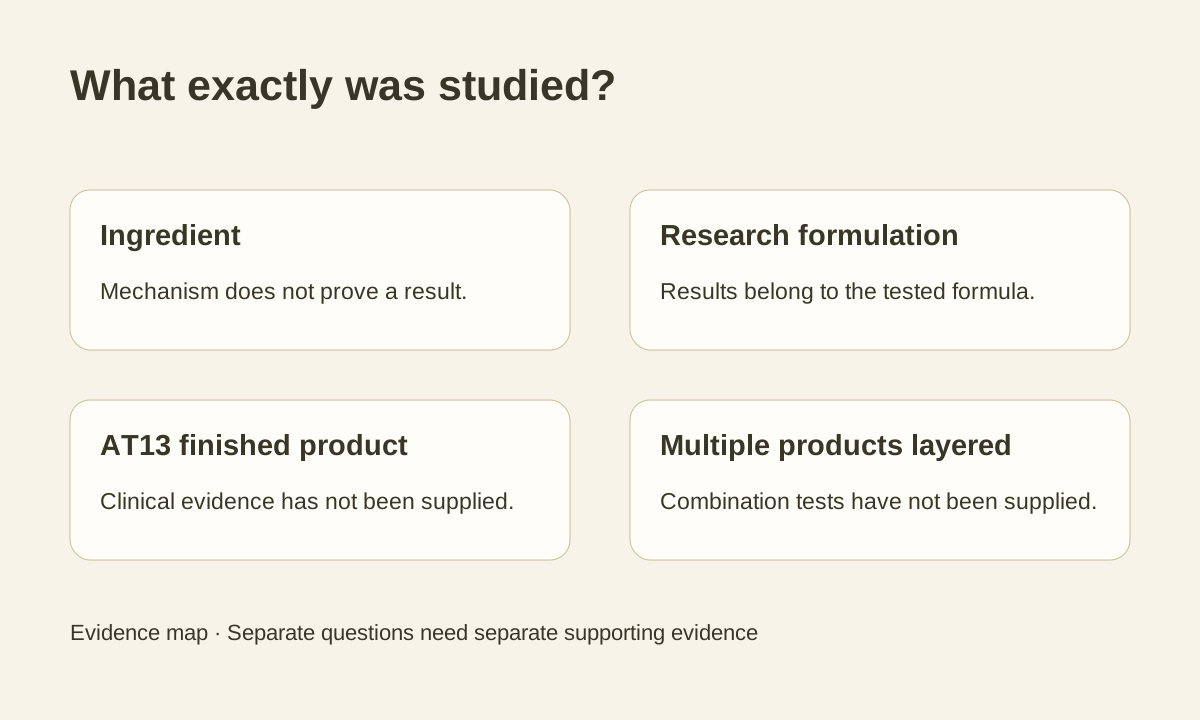
The AAD's sunscreen application guidance also discusses tinted sunscreen containing iron oxide for protection against visible light and dark spots. Its melasma self-care guidance addresses the particular context of melasma. Neither source means every tint contains the same ingredients, every color change has the same cause or a tinted product guarantees removal of spots.
Check the actual label and choose protection suited to your circumstances. A clinician can advise on a diagnosed pigment condition. This article does not turn a cosmetic routine into a melasma treatment protocol.
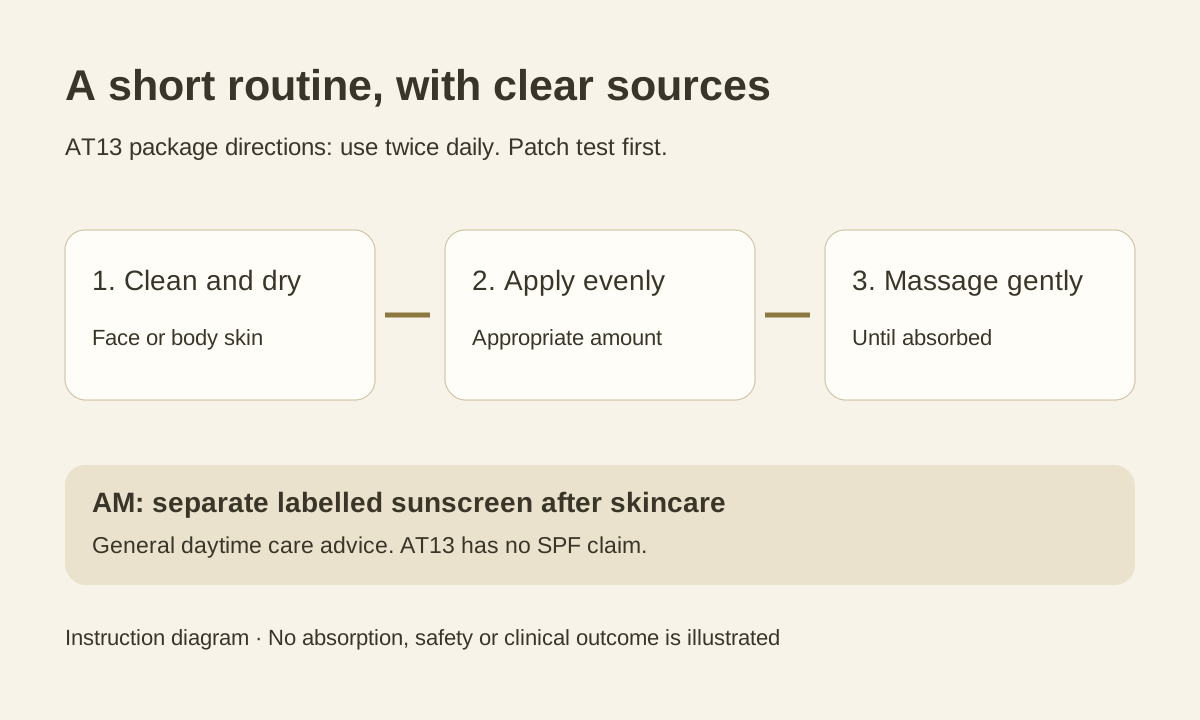
AT13 has no SPF claim
The AT13 package describes an arbutin and tranexamic acid cream, not a sunscreen. Its 8% arbutin and 5% tranexamic acid claims do not supply UV protection. Neither does the presence of niacinamide or other ingredients establish an SPF value.
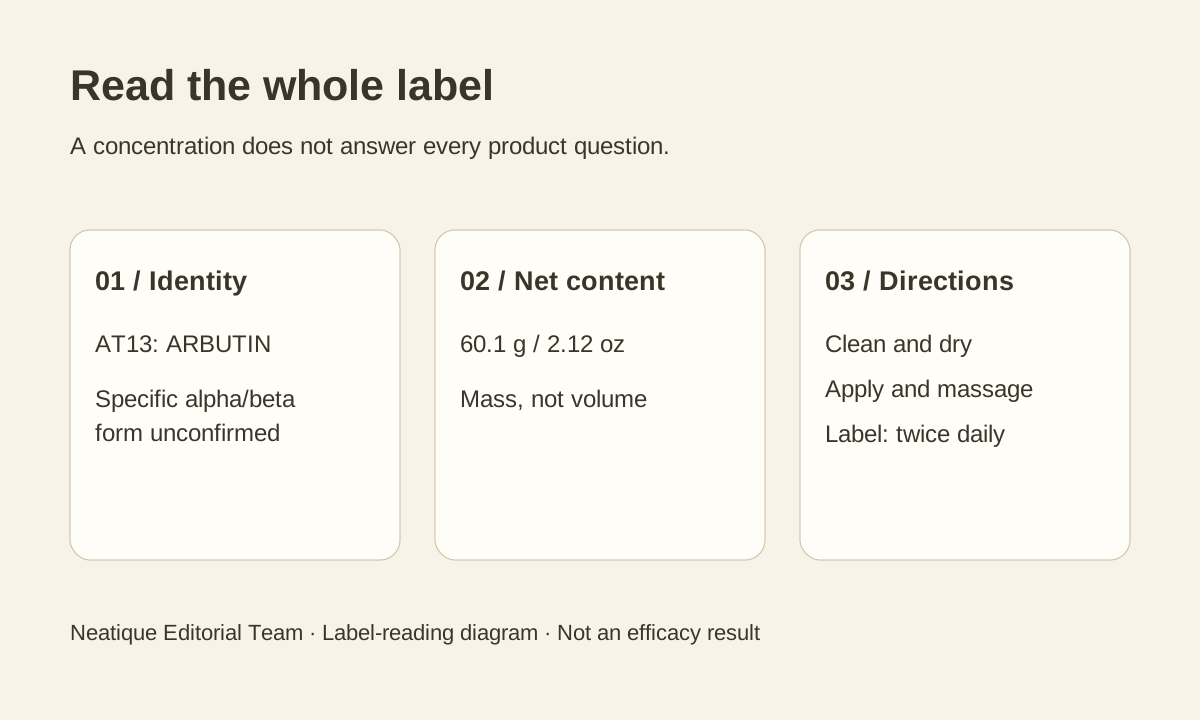
For its printed instructions, see the AT13 cream use guide. For research interpretation, read Arbutin and Tranexamic Acid. These guides answer different questions from the sunscreen label.
Keep a usable morning record
Record the products used, the sunscreen's label, application occasion and outdoor activity when evaluating your routine. This helps distinguish practical issues such as pilling from a claim about sunscreen protection. A home texture observation is not an SPF test.
When a new cosmetic causes irritation, stop it and assess the reaction. Do not continue solely to keep a multi-product tone routine intact. If a spot changes, remains unclear or requires treatment advice, seek professional assessment. Acne Marks vs Acne Scars explains another distinction that ingredient shopping cannot diagnose.
Frequently asked questions
Can AT13 replace sunscreen?
No. AT13 has no SPF claim. Use a separately labelled sunscreen for that purpose.
Does “brightening” mean UV protection?
No. A cosmetic appearance claim is different from sunscreen labelling and does not establish an SPF value.
Does every tinted cream protect against visible light?
Do not assume that. Inspect the actual product and the scope of its evidence. The AAD's iron-oxide guidance is specific to its melasma advice.
Can I use a smaller sunscreen amount if I already applied cream?
Follow the sunscreen's own amount and reapplication directions. Another skincare layer is not a reason to reduce protection.