

Post-acne color changes and acne scars are different concerns. A flat area with a different color is not the same as a depression or raised area that changes the skin's contour. They can occur together, and a clinician can assess what you are seeing. A cosmetic cream should not be presented as correcting scar structure.
Start with color and contour
The American Academy of Dermatology's acne-scar guidance distinguishes changes in color after acne from depressed and raised scars. A casual photograph or product quiz is not enough to diagnose the cause of an individual spot.
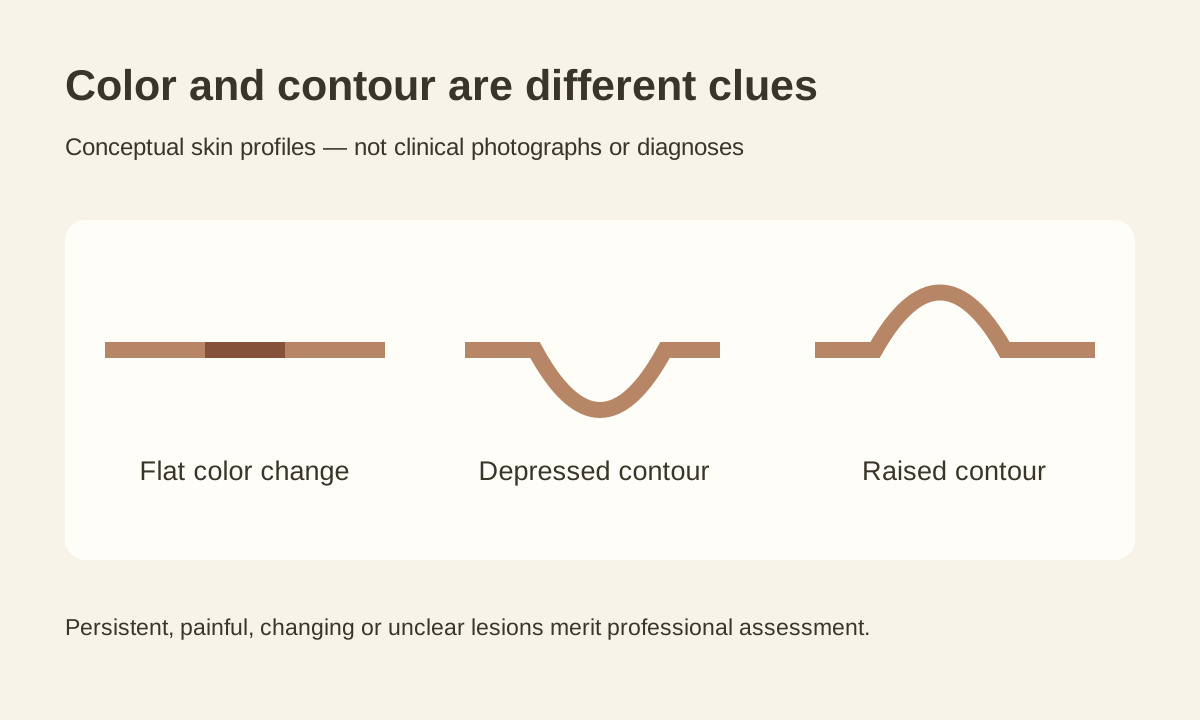
| Observation | Question to ask | Limit of everyday cosmetic care |
|---|---|---|
| Flat color change | Is the surface contour unchanged? | Appearance care is not proof of a diagnosed pigment condition or its treatment |
| Depression | Is there a lasting indentation? | An ordinary tone-focused cream cannot be described as rebuilding that contour |
| Raised area | Is there a lasting elevation or firm tissue? | Do not promise that a cosmetic flattens a scar |
| Active or changing lesion | Is there pain, swelling, discharge or an evolving spot? | Seek assessment rather than assigning it an old-acne-mark label |
Color, lighting and camera exposure can also change how a mark appears. An explanation should not turn every red, purple or brown area into one diagnosis. Persistent or uncertain findings merit professional evaluation.
What a skincare label can answer
A product page can tell you its format, ingredients, net content, directions and warnings. It cannot determine whether your concern is a mark, scar or another condition. Studies of pigment-related ingredients should not be repurposed into a claim about changing scar depth or raised tissue.
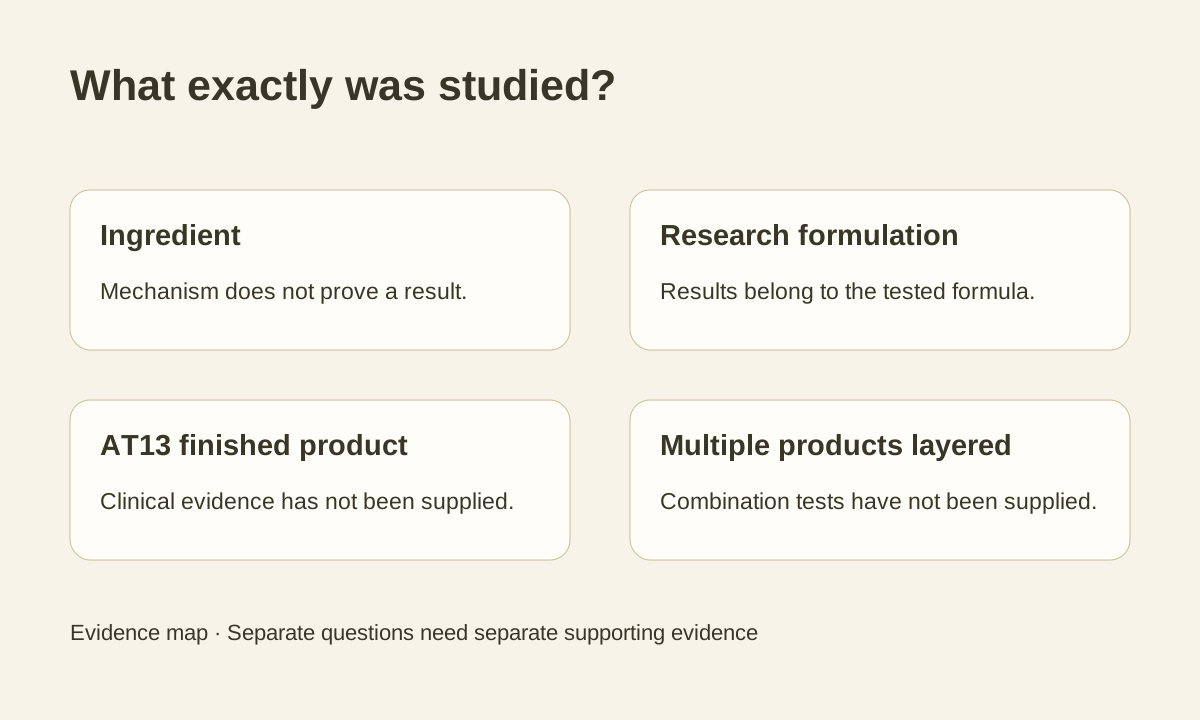
When reading “for acne scars” on a shopping page, look for the exact outcome being claimed. Is the brand discussing a color change or a structural scar? Is the evidence for the finished product? Are photographs dated, taken under comparable conditions and described honestly? A product name or search keyword does not resolve these questions.
A manageable everyday routine
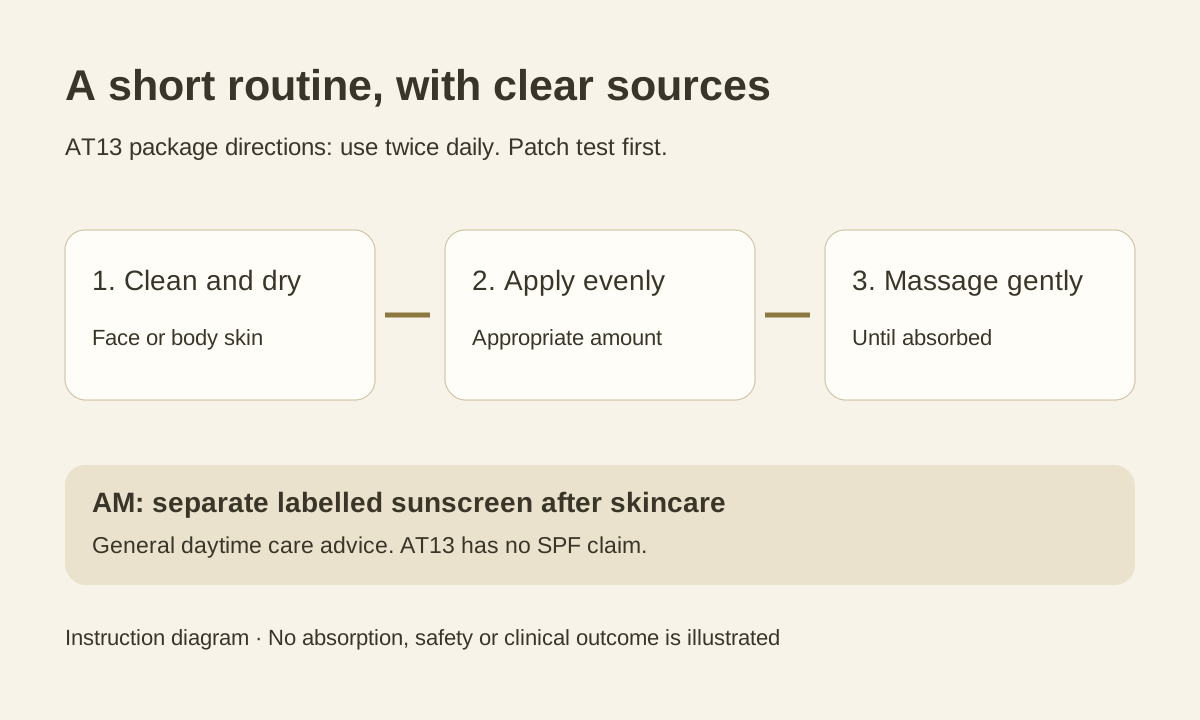
Gentle routine organization and daytime protection are useful topics to discuss separately from scar treatment. Keep track of products you use and avoid adding several unfamiliar tone-focused products simultaneously. Stop a new product if irritation develops.
Read sunscreen guidance for an uneven-tone routine. If you are considering a cosmetic with arbutin or tranexamic acid, the combination-evidence guide explains what an ingredient study cannot establish. The package-based cream guide shows how to distinguish printed instructions from general routine advice.
When professional assessment is the useful next step
Seek advice when a lesion is painful, changing, persistently inflamed or difficult to identify, or when acne remains active and scars are developing. A clinician can discuss the cause and relevant options. This guide does not recommend a procedure, diagnose a lesion or supply a treatment timeline.
If you keep photographs for a consultation, record the date, lighting and concurrent products. Do not compare images with substantially different exposures as evidence of product effectiveness. A real personal record may still reflect changes beyond one cosmetic and should be described with those limitations.
Frequently asked questions
Is every mark after acne a scar?
No. A color change can remain after acne without a structural scar. Color and contour changes can also coexist.
Can arbutin cream fill an indentation?
No supplied evidence supports presenting an ordinary arbutin cream as rebuilding a depressed scar. Ingredient discussions about pigmentation concern a different outcome.
Does a photograph establish the diagnosis?
No. A photograph can document appearance but may not distinguish causes. A professional assessment is useful when the finding is persistent, changing or unclear.
How long should a cosmetic take to remove marks?
This guide cannot give a universal deadline or promise removal. The cause, product, evidence and individual circumstances differ.