
Choose a tranexamic acid serum or cream by the step your routine needs, then compare the complete labels. “Serum” and “cream” describe formats; they do not establish which product is more effective. A higher tranexamic acid percentage also does not rank finished-product results.
First identify the missing routine step
If you already have a moisturizer you like, a serum may be the format you are comparing. If you are looking for a cream step, compare complete creams. Neither choice requires a matching set. Check each product's directions before placing it in a routine; familiar format conventions are not combination-test evidence.
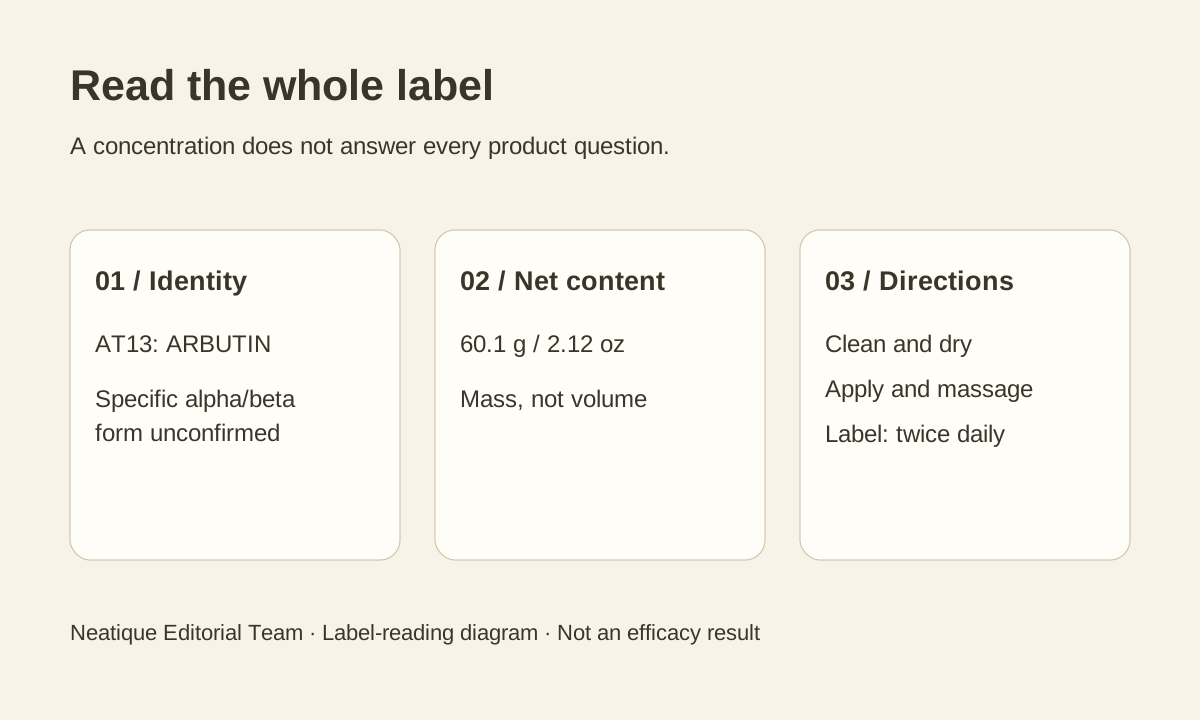
AT13, NT16 and TNV3: current label comparison
| Product | Format and net content | Labelled headline concentrations | Other relevant label information |
|---|---|---|---|
| AT13 | Cream; 60 mL; packaging net weight 60.1 g / 2.12 oz | 8% arbutin; 5% tranexamic acid | Full INCI published; ARBUTIN form unconfirmed; niacinamide listed without percentage; squalane and shea butter listed |
| NT16 | Serum; 30 mL / 1 fl oz | 11% niacinamide; 5% tranexamic acid | ARBUTIN also appears in the INCI; its percentage is not stated |
| TNV3 | Serum; 30 mL / 1 fl oz | 10% tranexamic acid; 2% nicotinamide; 2% vitamin C | Nicotinamide is niacinamide; the INCI lists 3-O-ETHYL ASCORBIC ACID |
This is a label comparison, not a clinical performance ranking. AT13 mass cannot be directly divided by the serums' volume to compare equal quantities. A density would be needed to convert grams into millilitres; none is inferred here.
How the three products are shown in use
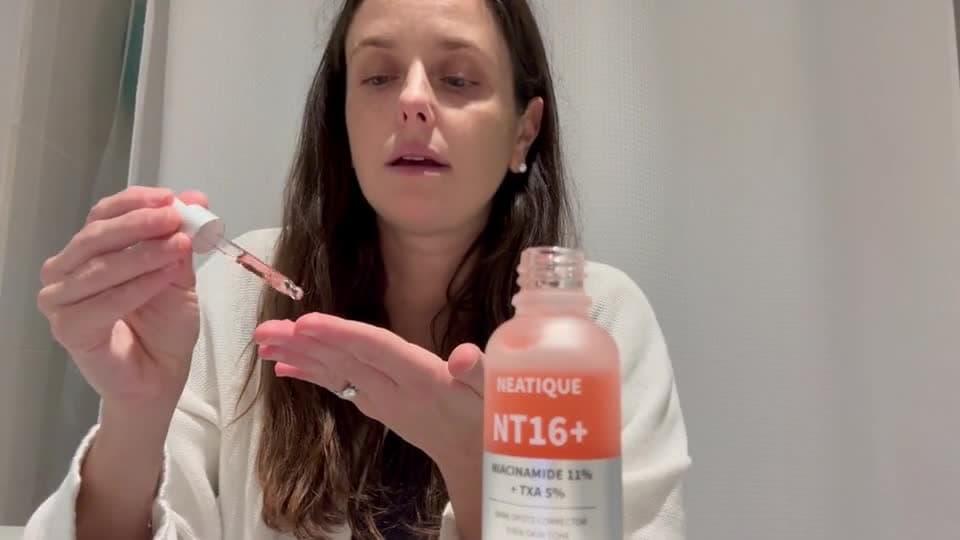
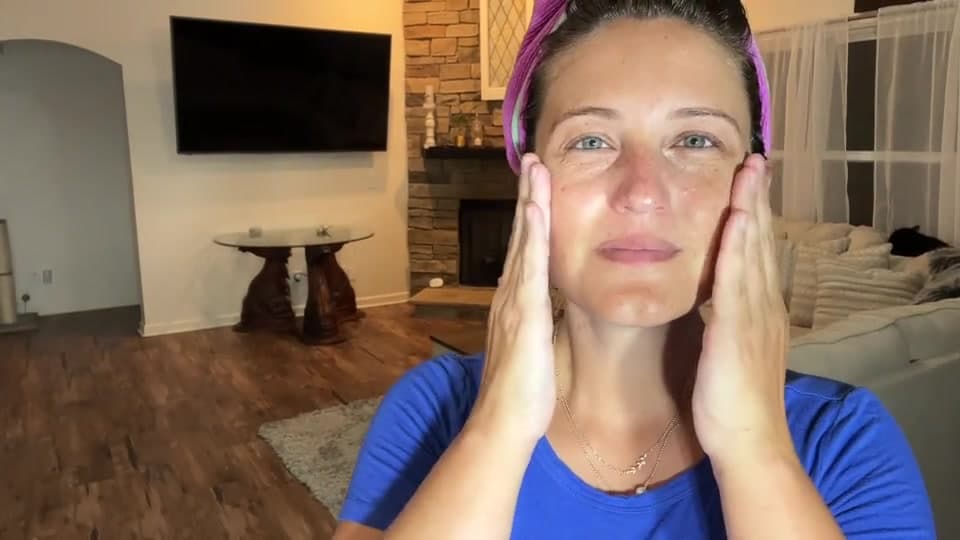
These separately photographed examples show the cream lifted from its jar, serum in the NT16 dropper and TNV3 being applied to the face. Lighting, amounts and stages of application vary across the images. The scenes cannot tell you which formula absorbs faster, pills less or feels lighter on your skin.
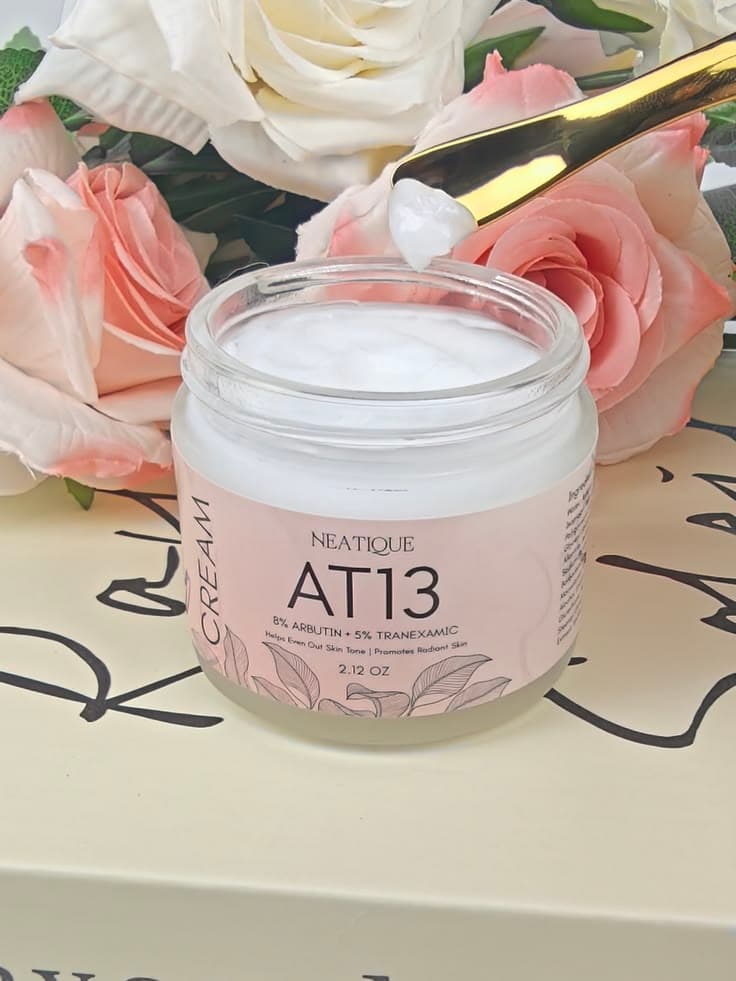
- Neatique's AT13 photograph on Pinterest
- Neatique's NT16 creator application video
- Neatique's TNV3 creator application video
Overlap matters more than a matching ingredient theme
All three labels include tranexamic acid and niacinamide. AT13 highlights arbutin, which also appears in NT16's INCI without a stated percentage. TNV3 highlights vitamin C and identifies 3-O-ETHYL ASCORBIC ACID in its INCI. Buying more than one can therefore repeat ingredients beyond the headline names rather than fill a missing routine step. The ingredient name does not independently verify the supplied material's purity or finished-product performance.
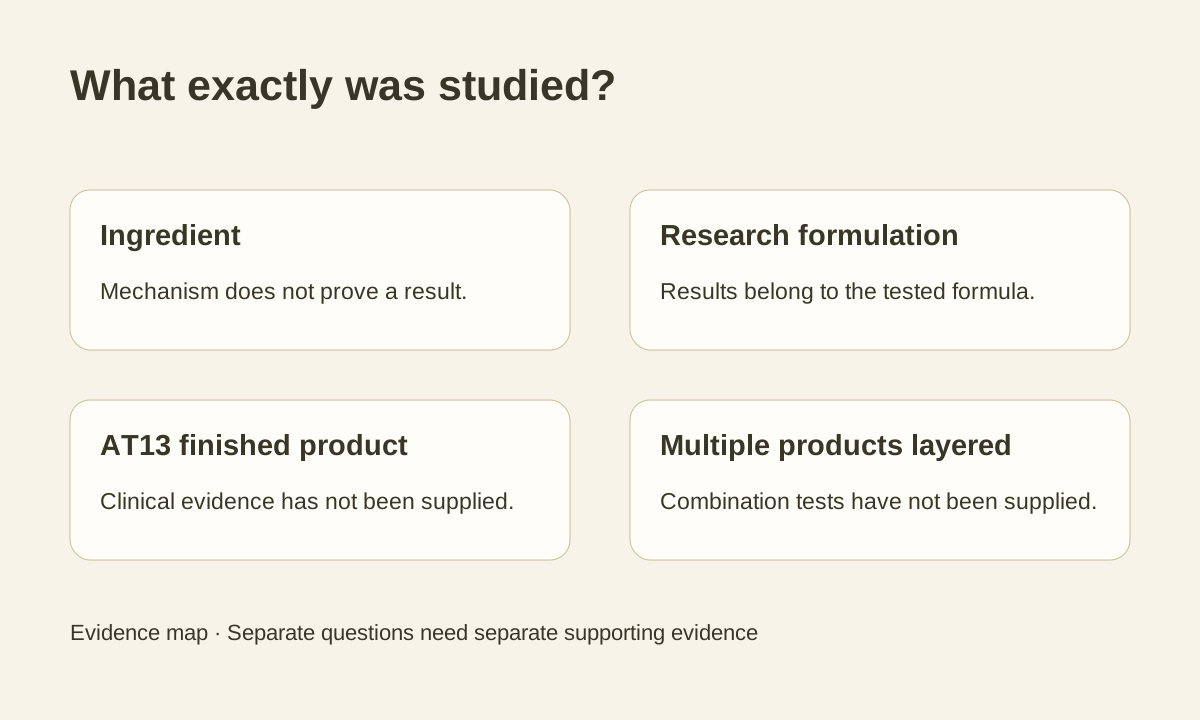
No AT13 + NT16 or AT13 + TNV3 finished-product layering test has been supplied for this comparison. Applying 5% and 10% tranexamic acid formulas does not produce a validated “15% routine.” Amounts, bases, interactions and exposure differ. See the overlap guide.
A purchasing checklist, including moisturizer selection
- Choose the task and format you need before sorting by concentration.
- Review the full INCI for known sensitivities and ingredients repeated in your existing products.
- Read directions, warnings, net content and the current package version.
- Ask for finished-product evidence rather than accepting a mechanism as a clinical result.
- Compare a dated price per gram for creams, or price per millilitre for serums, keeping unlike units separate.
- Introduce one unfamiliar tone-focused leave-on product at a time and record comfort. Stop if irritation develops.
This checklist also covers choosing a brightening moisturizer; it does not need a separate page with the same decision task. Start with the serum collection or AT13's label-based use guide. No cosmetic format supplies a substitute for appropriate sunscreen or professional assessment of a skin condition.
Frequently asked questions
Is a serum always lighter than a cream?
The format names are useful starting points, but the complete base and actual application matter. A specific feel needs observations of the actual products.
Is TNV3 stronger than AT13 because its TXA percentage is higher?
That label difference does not establish greater finished-product clinical effectiveness or tolerance.
How do AT13's 60 mL and the serums' 30 mL compare?
They are declared volumes: AT13 is 60 mL, while NT16 and TNV3 are each 30 mL. This compares product size, not clinical effectiveness or the amount you should apply. AT13's separate packaging net weight of 60.1 g / 2.12 oz is a mass measurement.
Do I need all three products?
No label requirement or supplied combination test establishes a need to use all three. Choose a routine step and examine overlapping ingredients.
Official product label sources
The comparison above uses the current package facts recorded for these products. Check the official pages and the package supplied with your own product; a product page or label establishes its stated ingredients and directions, not clinical effectiveness or finished-product layering results.