

There is no universal winner between arbutin and tranexamic acid in skincare. Compare the exact ingredient identity, the finished formula and research matching the question you need answered. A mechanism, a front-panel percentage or a study of a different combination does not rank every product containing the ingredient.
Different mechanisms, different levels of evidence
Arbutin research in cultured human melanocytes examined tyrosinase-related inhibition. A tranexamic acid laboratory study examined melanocyte–keratinocyte interaction and the plasminogen/plasmin system. These models help formulate research questions; they do not demonstrate a result for a commercial cream.
| Comparison question | Arbutin | Tranexamic acid | Buying implication |
|---|---|---|---|
| Identity | Check ARBUTIN versus ALPHA-ARBUTIN and supporting documents | Check TRANEXAMIC ACID in the current INCI | Copy exact names before comparing |
| Mechanism literature | Includes laboratory tyrosinase investigations | Includes laboratory signalling investigations | Do not convert mechanisms into a product ranking |
| Clinical formula | Ask which form, concentration and base were tested | Ask concentration, base and accompanying ingredients | Match the finished product and study |
| Route | Keep topical evidence distinct | Keep topical, oral, injected and procedural evidence distinct | Do not transfer medical administration results to cosmetics |
| Routine fit | Depends on the complete product | Depends on the complete product | Choose a needed step and review warnings |
Why a comparison headline can mislead
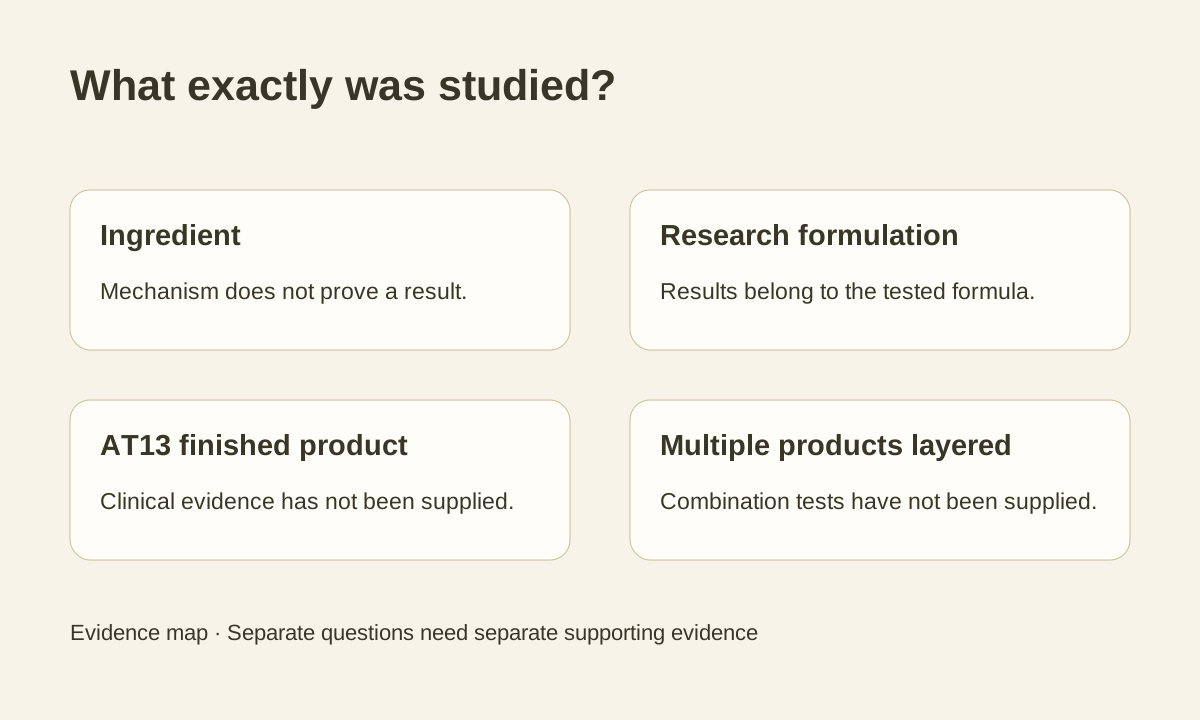
A study testing a multi-ingredient serum against another formula does not automatically establish which individual ingredient caused the difference. Even a well-controlled trial answers the comparison it actually made. Read the comparator, duration, participants, measured outcome and accompanying skincare before applying a result to a purchase.
For example, a clinical trial of tranexamic acid combination serums studied defined formulas. It does not supply a head-to-head trial of all arbutin products against all tranexamic acid products. A cream with both names on the front panel is another formulation, not a replication by default.
A finished-product example: AT13
Neatique AT13 publishes its complete packaging INCI, listing both ARBUTIN and TRANEXAMIC ACID, with front-panel claims of 8% and 5%. Neatique confirms 60 mL volume; packaging net weight is 60.1 g / 2.12 oz. The specific alpha/beta arbutin form remains unconfirmed, and AT13 clinical test results have not been supplied.
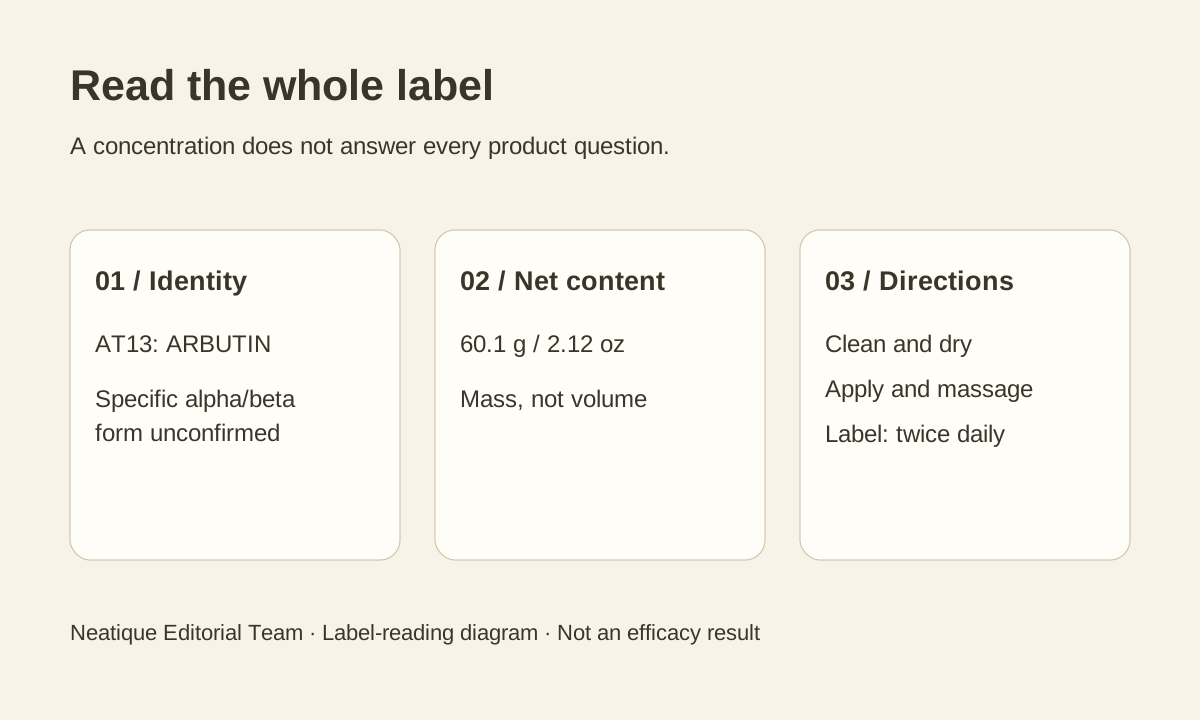
Those facts do not establish AT13 as stronger than a serum with a different tranexamic acid percentage, or safer than an alpha arbutin formula. They also do not show what AT13 contributes when layered with another product. Read ingredient identity before making a concentration comparison.
A practical selection checklist
- Define the task: ingredient education, an everyday cosmetic routine or a condition requiring clinical assessment.
- Identify the missing step: serum, cream or daytime protection. Avoid choosing two new products only because they have different headline ingredients.
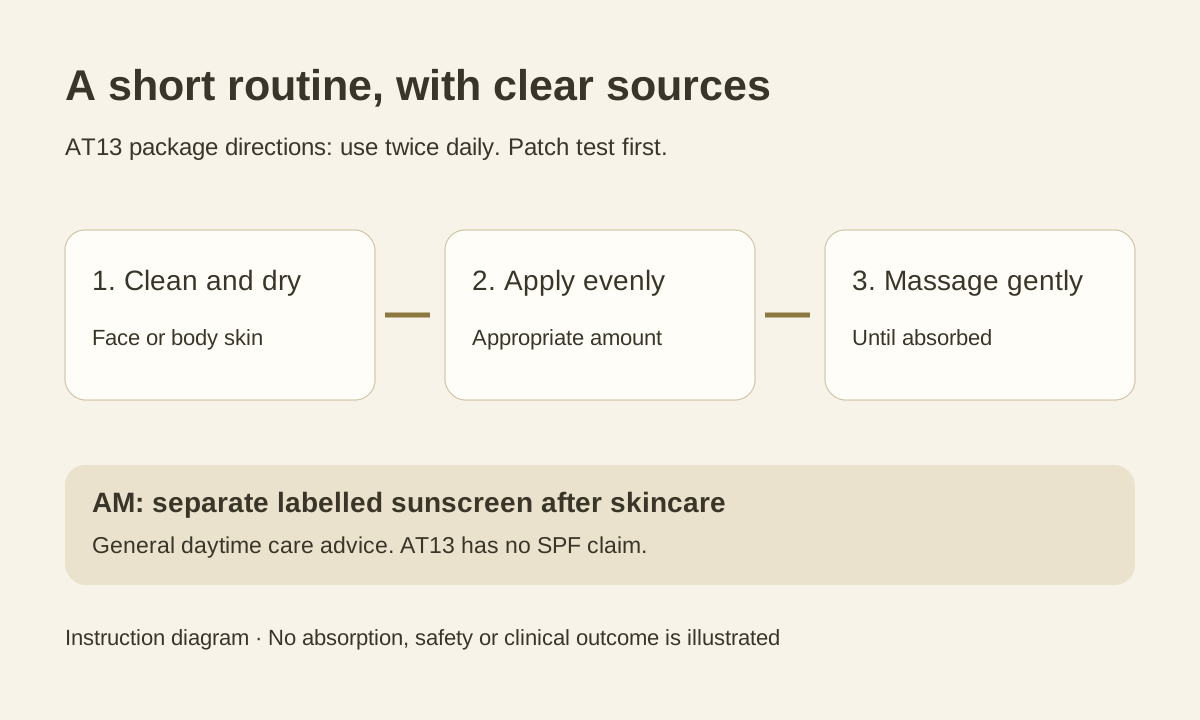
- Check the full INCI, directions and warnings against your known sensitivities and current products.
- Ask whether supplied research actually tested that finished product and a relevant outcome.
- Record unknowns, including ingredient form, unstated percentages and combination testing.
- Compare serum and cream formats if the routine role is the main decision.
If ongoing acne, changing lesions, persistent irritation or a diagnosed pigment condition is the underlying concern, a clinician can assess it. This comparison does not diagnose the cause or promise treatment results. Continue to the combination guide for the distinction between a studied formula and bottles used together.
Frequently asked questions
Can ingredient mechanisms tell me which product will work faster?
No. A laboratory mechanism does not specify a finished product's time to result in a particular user.
Can I compare oral tranexamic acid studies with a cosmetic cream?
Keep them separate. Routes, doses, medical supervision and risks differ; oral findings do not establish cosmetic results or suitability.
Does AT13 combine the best of both ingredients?
Its label lists both ingredients. A claim that it outperforms either alone needs a relevant finished-product comparison that has not been supplied.
Should I buy both a serum and a cream to increase percentages?
Percentages cannot be added into a reliable routine-strength score. Choose a needed step and check overlap and evidence before combining products.