

Before combining tranexamic acid skincare with retinol, check the actual products, directions, warnings and evidence. Ingredient names alone do not establish that two finished products have been tested together. No AT13 + retinol combination test has been supplied for this guide.
Define the retinol product first
“Retinol” can refer to one ingredient, a broad marketing category or a routine containing a different retinoid. Record the exact ingredient, labelled concentration if stated, format, directions and whether it is a prescribed treatment. Do the same for the tranexamic acid product. Do not substitute a generic compatibility chart for those details.
The AAD's retinoid and retinol guidance discusses irritation and product selection and advises against retinoid use during pregnancy. It does not evaluate retinol layered with AT13. If a clinician prescribed your treatment, ask about changing that routine before adding a cosmetic.
A product-information checklist
| Check | Why it matters | Record before changing the routine |
|---|---|---|
| Exact identity | Retinol and other retinoids are not interchangeable labels | Current product name and full INCI |
| Frequency | Directions differ between products | Label frequency or prescribed schedule |
| Overlap | Other ingredients may also affect comfort | Existing acids, tone-focused products and fragranced formulas |
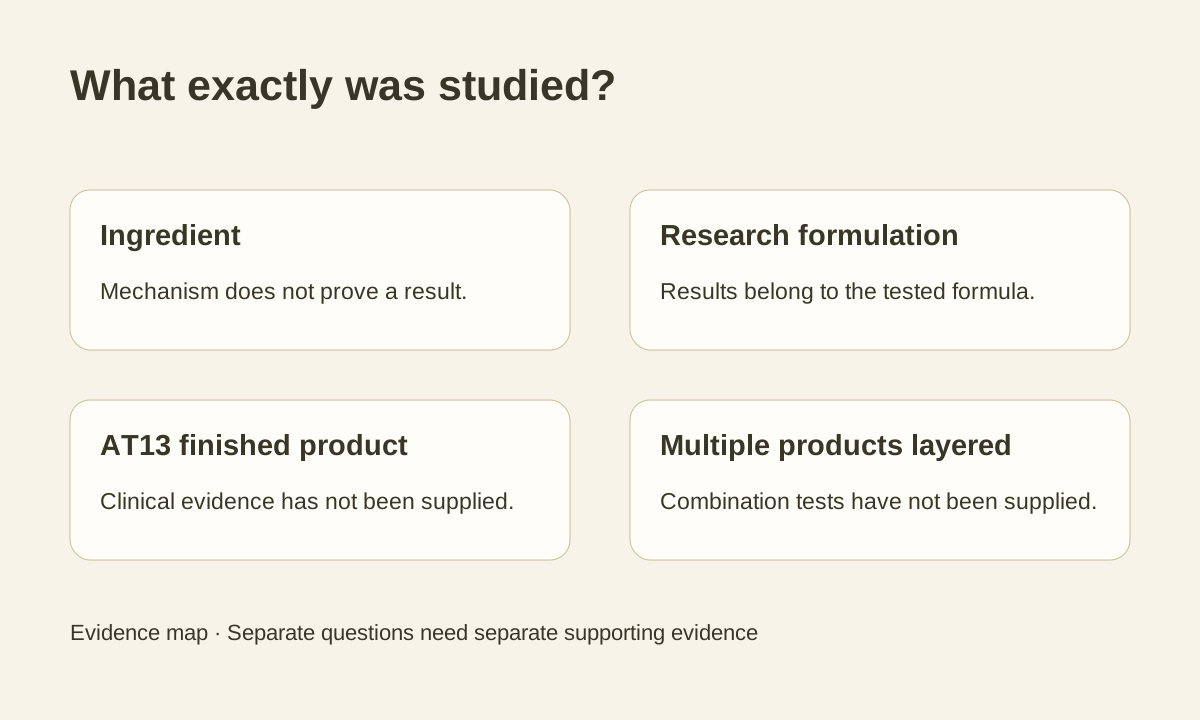
| Evidence | A same-formula study differs from bottles layered together | What exact combination, if any, was tested |
| Skin response | Introducing several products obscures the cause of a problem | Products, dates and any symptoms |
This checklist organizes questions. It does not establish a safe schedule or authorize changes to a prescribed treatment.
Where AT13 facts stop
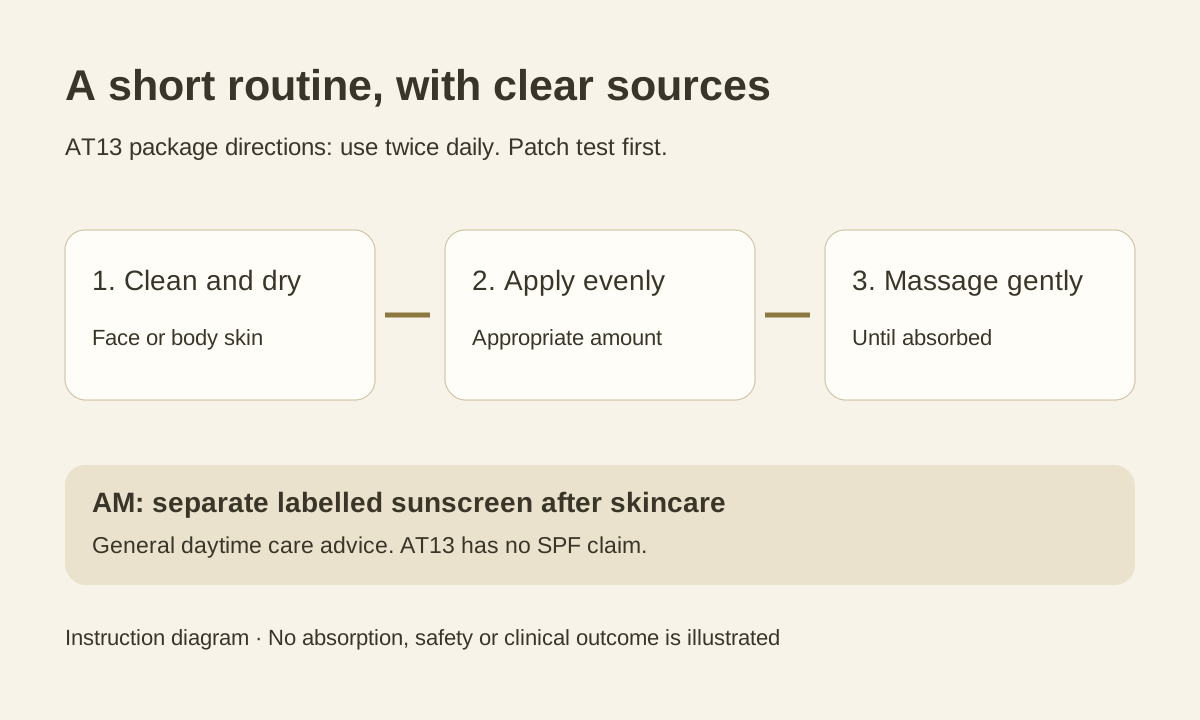
AT13 is labelled 8% arbutin and 5% tranexamic acid. It also lists niacinamide without a percentage. The INCI reads ARBUTIN, with the specific alpha/beta form unconfirmed. Its directions say clean and dry skin, apply evenly, massage until absorbed and use twice daily.
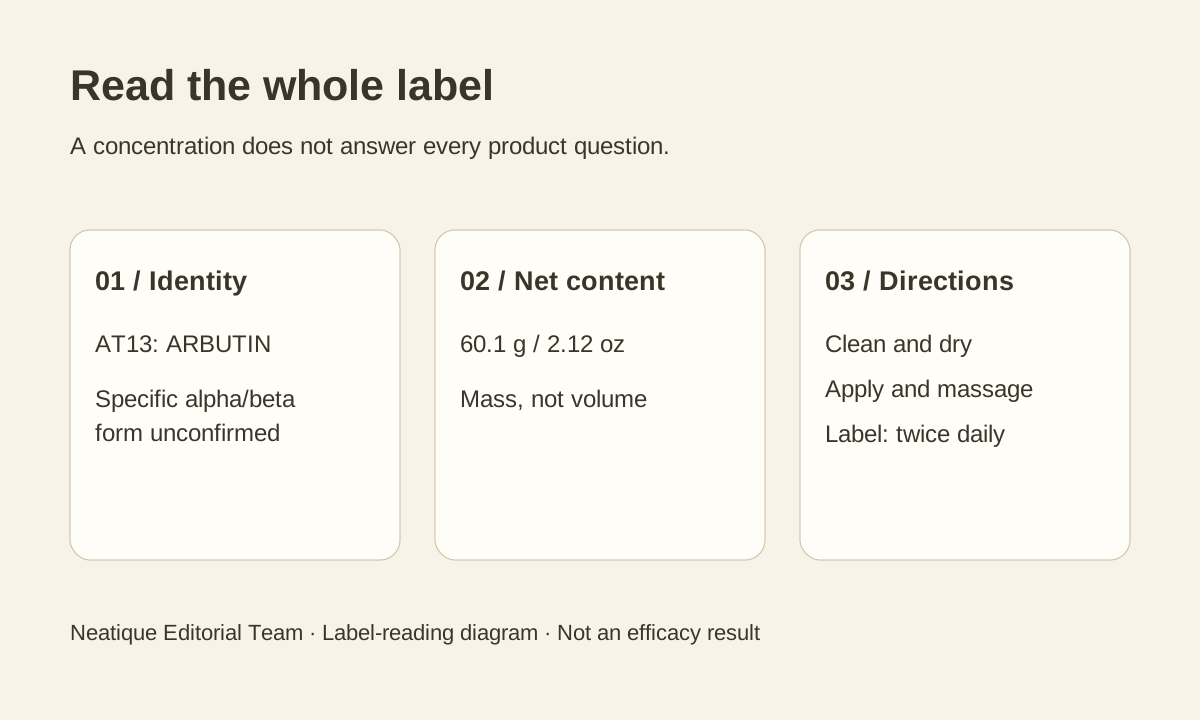
Those directions do not say that retinol was included in a combination test. Nor do the highlighted ingredients establish pregnancy, post-procedure or sensitive-skin suitability. Keep those questions distinct from the format and routine-order question.
Make one change easier to interpret
If you are assessing a new cosmetic within an otherwise appropriate routine, introduce one unfamiliar tone-focused leave-on product at a time and keep a dated record. Adding a new retinol, cream and exfoliant together makes it harder to identify what changed when discomfort appears.
Using products at different times can separate application occasions; it does not prove the overall regimen is safe or prevent all irritation. This guide therefore does not prescribe alternate nights as an established AT13 protocol. A clinician can help assess the particular products and your circumstances when that decision needs professional advice.
When to pause and seek advice
Stop a new product if irritation develops. Persistent burning, rash, swelling or other significant symptoms deserve professional assessment. Do not interpret an uncomfortable response as evidence that a product must be working. Pregnancy, a recent skin procedure, a diagnosed condition or prescription use also needs advice specific to that situation.
Read the AT13 use guide, ingredient identity and the combination-evidence guide for the relevant label and evidence questions.
Frequently asked questions
Does tranexamic acid make retinol gentler?
That conclusion requires evidence for the particular formula or regimen. No supplied AT13 test establishes it.
Does alternating mornings and evenings guarantee tolerance?
No. A timing arrangement is not a combination-safety study, and repeated use can still cause discomfort.
Should I increase AT13 when I skip retinol?
No label instruction supports compensating by increasing AT13 amount or frequency. Follow the package and any clinician's advice.
Can I continue if my skin feels irritated?
Stop the new product and assess the symptoms. A general ingredient guide cannot determine the cause or advise continuing through irritation.