NAD+ is a molecule that appears throughout biology textbooks, supplement advertising and a growing number of skincare labels. That overlap creates an easy misunderstanding: because NAD is essential inside cells, a cosmetic with NAD+ in its ingredient list must restore cellular energy, repair DNA or reverse aging. The first statement is established biology. The second is a product claim that requires evidence about the exact topical formula.
This guide separates those questions. It explains what NAD means, how niacinamide and the precursors NMN and NR relate to it, why intact skin changes the evidence problem, and what a shopper can verify on a cosmetic label. It does not cover injections, IV therapy or supplements, and it does not treat evidence for one route as proof for another.
NAD in skincare in 60 seconds
- NAD stands for nicotinamide adenine dinucleotide; the plus sign commonly refers to its oxidized form, NAD+.
- NAD participates in normal energy metabolism, redox reactions and enzyme systems inside cells.
- Niacinamide is not NAD+. It is a vitamin B3 form that can participate in biological pathways used to make NAD.
- NMN and NR are also related precursors, but they are distinct molecules with different evidence and regulatory questions.
- A topical ingredient must remain stable in a finished formula, reach the relevant site and be used at an appropriate level before intracellular biology becomes a defensible product claim.
- Ingredient presence is not the same as proven delivery or a clinical outcome.
- Read the complete INCI list, directions, warnings, fragrance disclosure, packaging and finished-product evidence.
What is NAD+?
Nicotinamide adenine dinucleotide is a coenzyme found in living cells. It can shift between oxidized and reduced forms, commonly written as NAD+ and NADH, while participating in metabolic reactions. NAD also serves as a substrate for enzymes involved in processes such as signaling and maintenance of cellular function.
Those roles are real and important. They are also much broader than skincare. A review of NAD metabolism and skin aging can help researchers identify mechanisms worth studying, but a mechanism is not a finished consumer-product trial. It cannot tell you whether a particular cream is stable throughout its shelf life, whether the ingredient crosses the outer skin barrier in a useful amount, or whether users experience a measured benefit.
The distinction is the foundation of responsible NAD skincare content: biological relevance can justify research interest, while product-specific claims still need product-specific evidence.
Why topical delivery is the central question
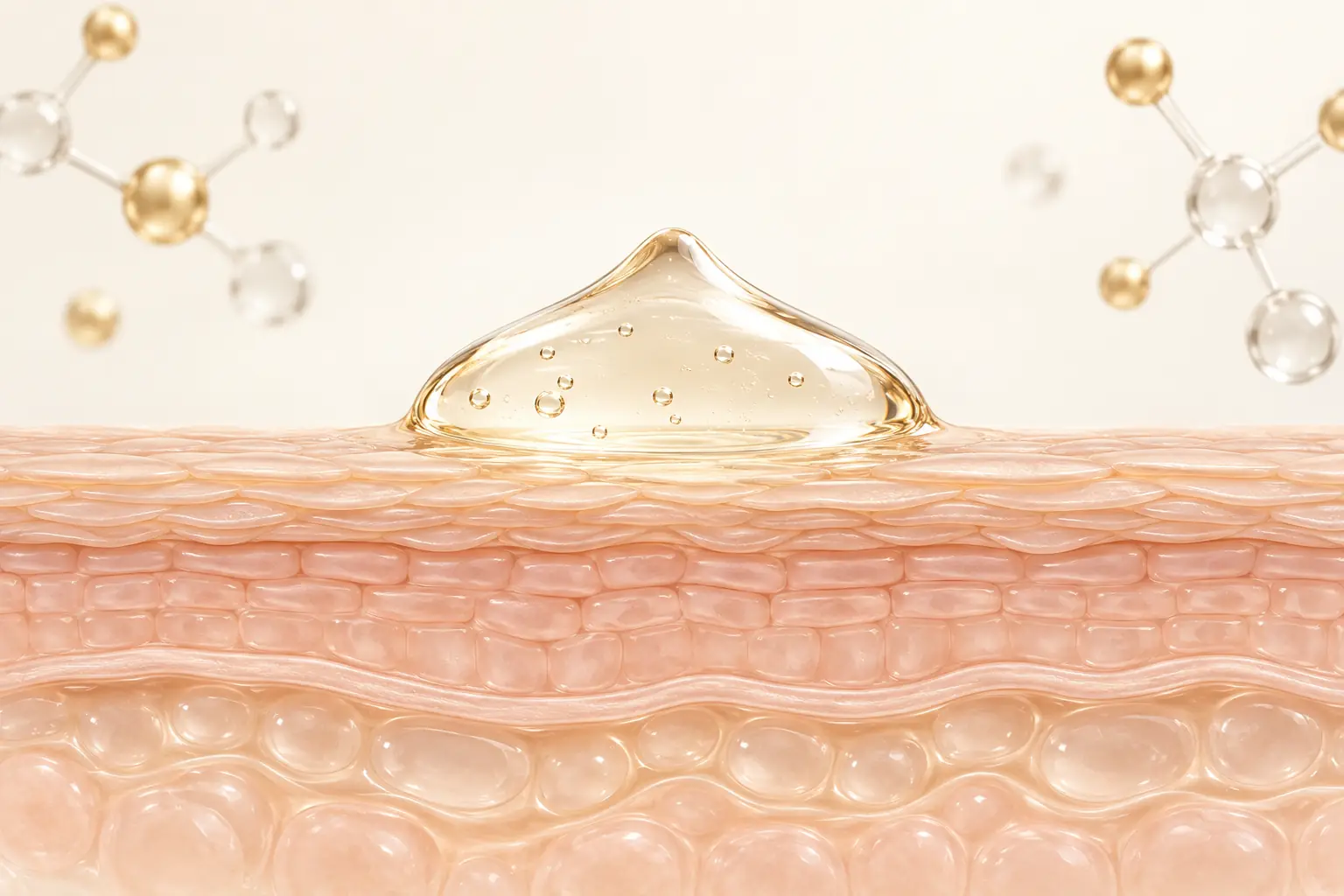
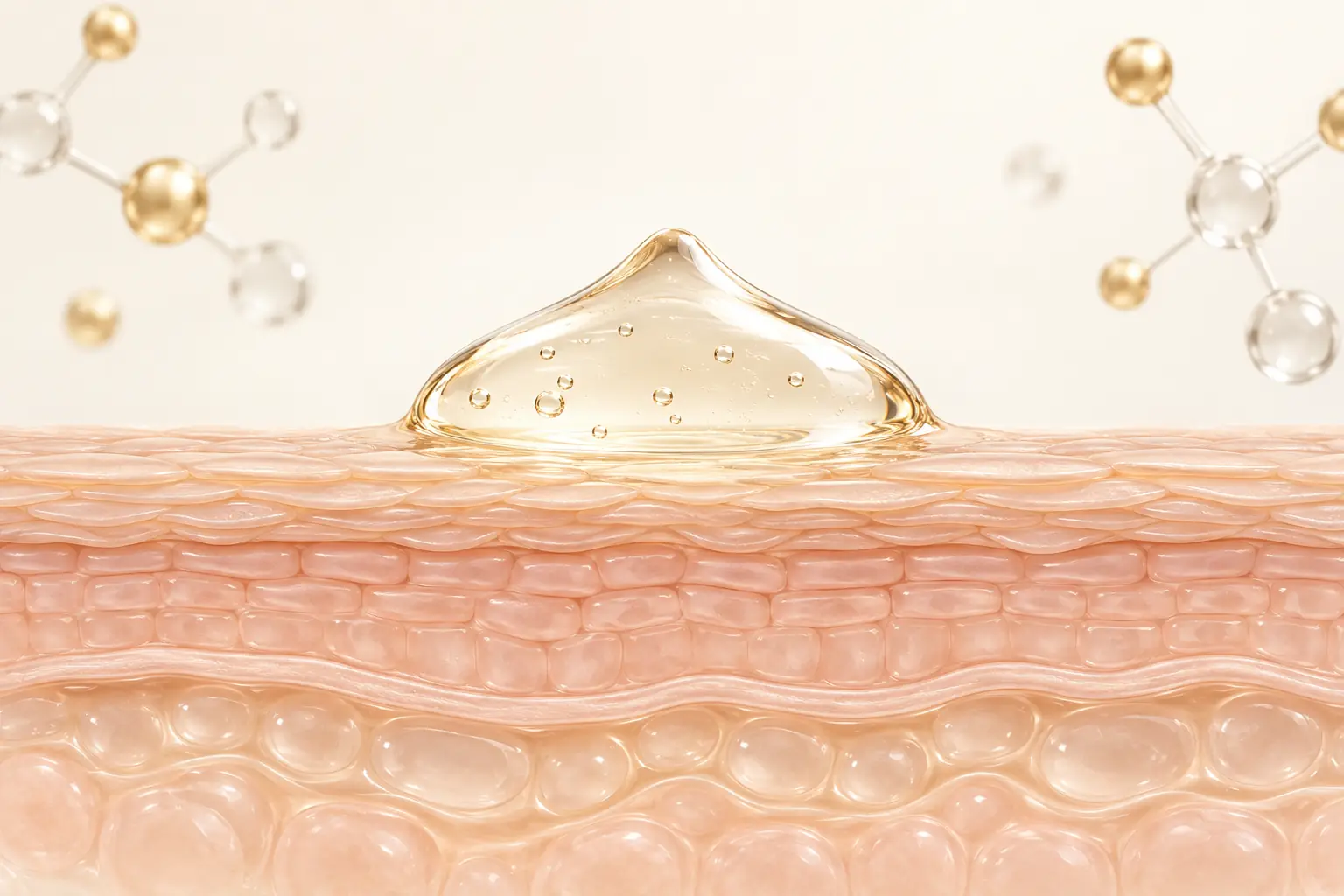
The outermost part of intact skin is designed to limit entry. Molecular size, electrical charge, water or oil affinity, vehicle, pH, concentration, contact time and packaging can all affect how a topical ingredient behaves. A raw-material study or cell experiment does not answer all of those questions for a retail serum or cream.
This does not mean a product is useless. A complete formula may still function well as a moisturizer or hydrating serum because glycerin, hyaluronic acid forms, emollients, film formers, ceramides or niacinamide support familiar cosmetic goals. It means those practical outcomes should not be rewritten as proof of intracellular NAD restoration.
When a brand makes a strong claim, ask what was actually tested:
1. Was the exact finished product tested rather than an isolated ingredient? 2. Was the study performed on people using the product topically on intact skin? 3. Was there a comparison group, suitable sample size and a clearly defined endpoint? 4. Were results measured objectively, reported completely and relevant to the advertised claim? 5. Does the tested formula, dose, package and use pattern match the product being sold now?
Without those details, modest language about texture, hydration and appearance is more defensible than promises about cellular renewal, DNA repair or age reversal.
NAD+, niacinamide, NMN and NR are related but not interchangeable
| Name | What it is | What the relationship means for skincare | |---|---|---| | NAD+ | Oxidized nicotinamide adenine dinucleotide | A cellular coenzyme; a topical label does not by itself demonstrate intracellular delivery. | | Niacinamide | A form of vitamin B3 | Can participate in NAD biosynthesis and has its own topical literature; it is not a synonym for NAD+. | | NMN | Nicotinamide mononucleotide | A NAD-related precursor studied in several contexts; evidence from oral or laboratory use does not validate every topical product. | | NR | Nicotinamide riboside | Another NAD-related precursor; route, dose and formulation remain essential when interpreting research. |
The practical point is not that one name is automatically better. It is that search results and advertising often collapse four distinct materials into a single “NAD booster” story. The NAD+ versus niacinamide comparison examines the most common version of that confusion in detail.
What the evidence can and cannot establish
Research on skin aging, oxidative stress and NAD metabolism provides useful scientific context. Some topical studies involving niacinamide also report cosmetic or barrier-related outcomes. Those findings support studying relevant formulas, not assuming equivalence among all NAD-branded products.
Evidence becomes less transferable as the product changes. A result from cultured cells is not a result from intact human skin. An oral precursor study is not a topical NAD+ study. A medical or injected intervention is not a cosmetic serum. A trial on one proprietary finished formula does not automatically validate another formula that shares one ingredient name.
The U.S. Food and Drug Administration explains how cosmetic claims are evaluated according to intended use. Language that promises to affect body structure or function, treat disease or repair DNA can change the regulatory meaning of a product. Responsible skincare pages should avoid medicalizing a cosmetic through metaphor.
How to read an NAD+ skincare label
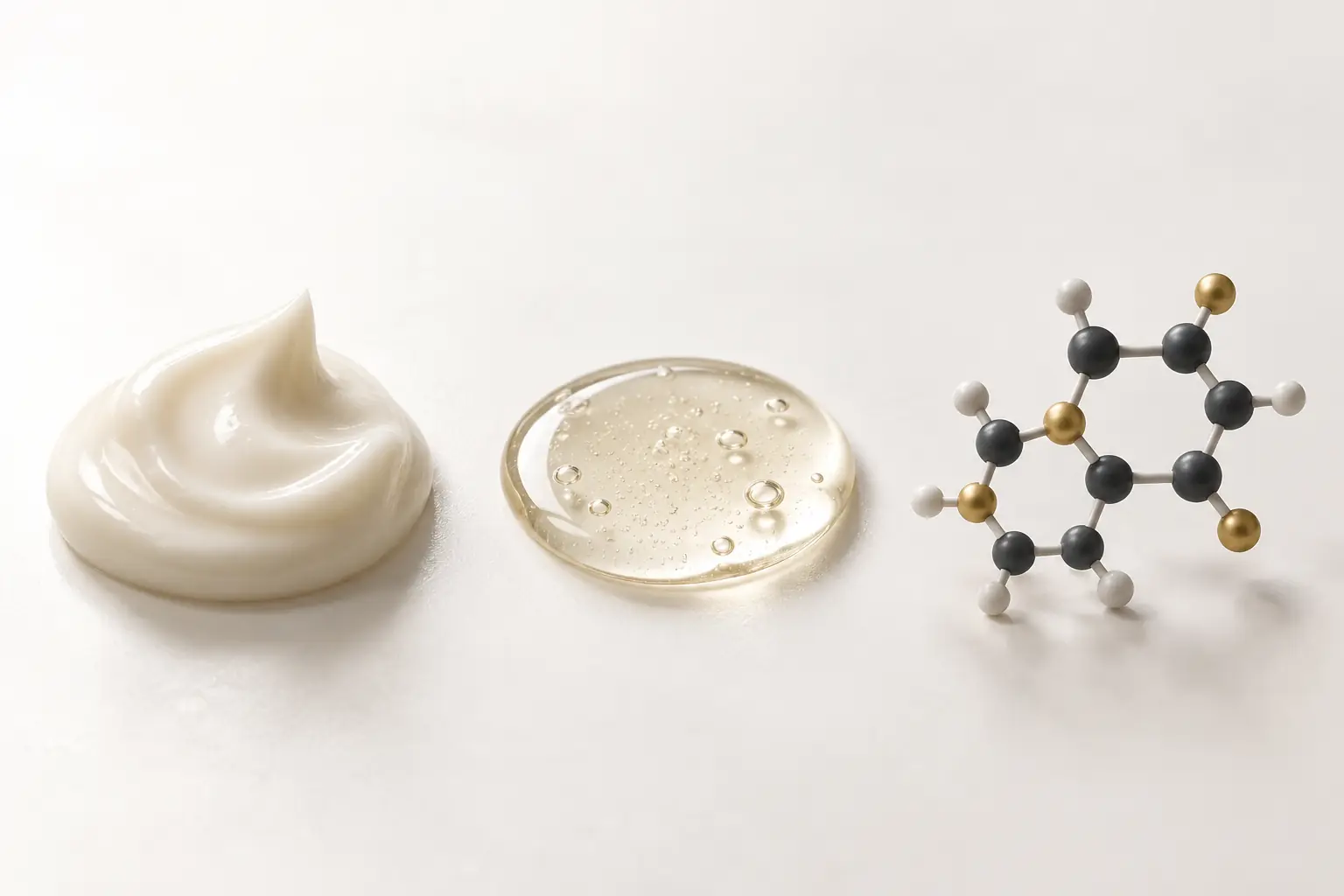
Start with the identity of the product. A serum is normally a lighter leave-on layer, while a face cream is the moisturizer step. The NAD+ skincare hub compares Neatique serum and cream by formula and texture so that the routine role stays clear.
Then work through the details that can be verified:
- **INCI name:** Look for nicotinamide adenine dinucleotide rather than relying only on the front panel.
- **Concentration:** If no percentage is provided, do not estimate one from ingredient order. Order is useful but does not disclose exact levels.
- **Supporting formula:** Humectants, oils, emulsifiers, preservatives, fragrance and other highlighted ingredients influence feel and tolerance.
- **Format and package:** Air, light and repeated opening can matter for stability. Follow the storage statement and period-after-opening symbol.
- **Directions and warnings:** Do not invent a pump count or use frequency when the package does not provide one.
- **Evidence:** Look for testing on the exact finished product and a measured outcome that matches the claim.
The current NAD+ Collagen Peptides Serum lists NAD+ alongside niacinamide, plant oils, humectants, hydrolyzed collagen and several peptides. Its package does not provide an NAD+ percentage. The NAD+ Face Cream lists NAD+, niacinamide, 3-O-ethyl ascorbic acid, glycerin, ceramide NP, shea butter, multiple hyaluronic acid forms and arbutin. Both disclose fragrance.
What NAD+ skincare can reasonably promise
A cosmetic page can accurately describe the product's texture, ingredient list, routine order, fragrance, package size and how it feels during use. If a finished-product study supports hydration or an appearance outcome, that evidence can be summarized with its limits.
Claims such as “repairs DNA,” “restores cells,” “reverses aging,” “rebuilds collagen” or “works like an injection” require a much higher evidentiary and regulatory threshold. A molecular pathway diagram is not a substitute for that evidence. Neither is a before-and-after image without controlled conditions.
For Neatique's current products, the responsible positioning is straightforward. The serum is a fluid leave-on step with a complex ingredient list. The cream is a fragranced moisturizer. Neither is presented as a treatment or as a way to change systemic NAD levels.
How to add an NAD+ cosmetic to a routine
Introduce one unfamiliar leave-on product at a time. Patch testing cannot guarantee that a reaction will never occur, but the American Academy of Dermatology describes how to test a skincare product on a small area before wider use.
For the serum, cleanse, spread a modest and even layer, then apply moisturizer. For the cream, cleanse, use any optional lighter serum first and finish with the cream. In the morning, broad-spectrum sunscreen remains the final skincare step. The NAD+ serum AM/PM routine guide explains how to adjust amount, rubbing and order if products pill.
Stop using a cosmetic if persistent burning, swelling, rash or discomfort develops. A product guide cannot diagnose a skin condition, and NAD-themed skincare should not delay professional evaluation.
Direct NAD+ versus a precursor strategy
Some products apply NAD+ itself, while others highlight niacinamide, NMN or NR because those materials relate to pathways used to maintain NAD inside cells. These are different formulation strategies. A pathway diagram may explain why a precursor interests researchers, but it does not rank commercial products or show that a cosmetic raises NAD to a clinically meaningful level.
Direct topical NAD+ has its own delivery and stability questions. A precursor has questions about topical penetration, conversion and the amount required. Niacinamide has a larger topical literature, but a study of niacinamide cannot be relabeled as a trial of direct NAD+. Each route needs evidence tied to the same ingredient, vehicle and endpoint.
Marketing sometimes uses “NAD skincare” as a broad umbrella for all of these approaches. When comparing products, write down the exact label ingredient and ignore the umbrella for a moment. That small step prevents a familiar precursor from being mistaken for NAD+ and prevents NAD's cellular role from being treated as proof for a precursor formula.
A useful hierarchy of evidence
Not every source answers the same question. A pathway review explains plausibility. A laboratory experiment can show what happened under controlled conditions. An ex vivo skin model can explore penetration or response outside a living person. A small uncontrolled user study can identify signals but is vulnerable to expectation, routine changes and natural variation. A well-designed human trial of the finished product gives the most direct answer about that product's measured cosmetic outcome.
Packaging and manufacturer documents answer a different set of questions: identity, directions, warnings, size, storage and sometimes concentration. They do not establish efficacy, but they are essential for checking whether an article accurately describes what is sold.
For a practical evidence check, match every claim to the source that would be needed to prove it. Hydration can be measured with established instruments. Appearance claims can be graded or photographed under controlled conditions. Intracellular NAD change requires a relevant biological measurement. “DNA repair” or treatment language raises still larger scientific and regulatory questions. If the evidence measures only user satisfaction, it should not be presented as a cellular result.
Who should take extra care?
People with fragrance sensitivity should note that both current Neatique NAD+ labels disclose fragrance or parfum. Anyone managing eczema, rosacea, an allergy or another diagnosed condition should avoid treating an ingredient trend as personalized medical advice. Use extra care on recently irritated or procedurally treated skin and follow the clinician's aftercare instructions rather than a general cosmetic routine.
Pregnancy, nursing and prescription treatment questions should be discussed with an appropriate healthcare professional who can consider the complete formula and individual context. The presence of NAD+ does not make a product automatically suitable or unsuitable; the full ingredient list and the user's circumstances matter.
Frequently asked questions
What is NAD in skincare?
It usually means a topical cosmetic that lists nicotinamide adenine dinucleotide or uses NAD+ in its product positioning. There is no universal NAD skincare formula or standard concentration.
Does topical NAD+ increase NAD in skin cells?
That should not be assumed from an ingredient list. Stability, delivery, concentration and finished-formula human evidence would be needed to support a product-specific claim.
Is NAD+ the same as niacinamide?
No. They are distinct molecules. Niacinamide can participate in biological pathways used to produce NAD, but the names are not interchangeable.
Is NAD+ serum better than NAD+ cream?
They serve different routine roles. Serum is the lighter layer before moisturizer; cream is the moisturizer. Choose according to texture and the step your routine lacks.
Can NAD+ skincare reverse aging or repair DNA?
Those are not appropriate assumptions for an ordinary cosmetic. Established intracellular biology does not prove that a retail topical product creates those outcomes.
Can I use NAD+ skincare with niacinamide?
Some formulas already contain both. Tolerance depends on the complete formula rather than the shared marketing theme. Introduce one new product at a time.
Does Neatique NAD+ skincare contain fragrance?
Yes. The current serum label lists parfum and the cream label lists fragrance. Review the complete INCI if you avoid fragranced products.
Is this guide about NAD injections or supplements?
No. It concerns topical cosmetics used on intact skin and does not recommend systemic or medical NAD interventions.